

Our Professional Air Duct Cleaning Process
Every home is different.
The size of the house, number of registers, layout of the ductwork, location of the furnace and accessibility of the main trunk lines can all affect how we approach a duct-cleaning job.
That's why our first step isn't connecting a vacuum.
It's understanding the HVAC system we're about to clean.
Table of Contents
1. Inspecting Your HVAC & Duct System
2. Connecting Our Duct-Cleaning Vacuum
3. Creating Negative Pressure
4. Cleaning the Individual Supply Ducts
5. Cleaning the Main Supply Trunk
6. Cleaning the Return Ductwork
7. Cleaning the Main Return Trunk
8. Final Inspection & Sealing the Ductwork
9. Before-and-After Photos & Service Report
Step 1 — Inspecting Your HVAC & Duct System
When we arrive, we begin with an inspection of the furnace and accessible duct system.
We're looking at the layout of the main supply and return trunk lines, the location of the furnace, the number and location of registers and return grilles, and where we can properly connect our duct-cleaning equipment.
This also gives us an opportunity to identify anything unusual before we begin.
Because we're HVAC technicians, we're not looking at your ductwork as an isolated collection of metal pipes. We're looking at how the duct system connects to the furnace, filter and blower and how air moves through the complete forced-air system.
Once we've established how we're going to approach the cleaning, we can begin setting up our equipment.
Step 2 — Connecting Our Duct-Cleaning Vacuum
Professional duct cleaning requires access to the duct system.
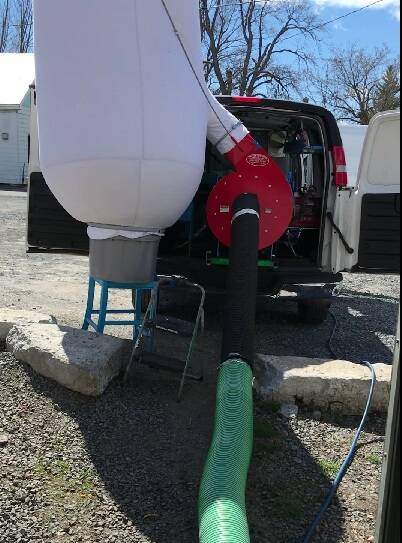
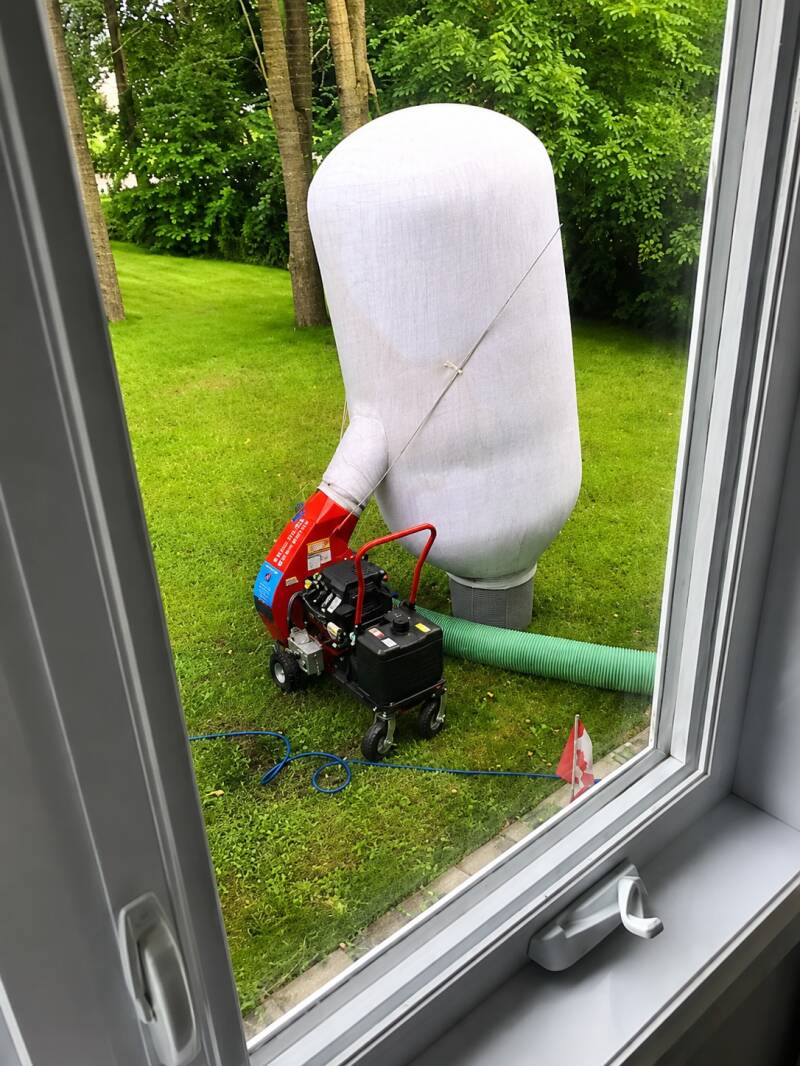
Depending on the layout of the home, we typically create an access point in the main sheet-metal ductwork that allows our large vacuum hose to be connected to the system.
Our vacuum equipment is then positioned and connected to the ductwork.
But there's something important to understand:
Connecting a powerful vacuum to your ducts doesn't automatically make them clean.
The vacuum is only one part of the process.

Step 3 — Creating Negative Pressure in the Duct System
Once our equipment is connected, the section of ductwork being cleaned is placed under negative pressure.
This is one of the most important parts of professional duct cleaning.
The purpose is to establish airflow toward our collection equipment while dust and debris are being loosened from inside the ductwork.
Think of it this way:
We're not trying to randomly blow dust around inside your ducts.
We're trying to loosen the material and move it in a controlled direction toward the vacuum collection equipment.
That's why professional duct cleaning requires more than simply sticking a shop-vac hose into a register.
The vacuum creates the negative pressure.
Our agitation equipment loosens the debris.
The two work together.
Step 4 — Cleaning the Individual Supply Ducts
Once negative pressure has been established, we begin working through the individual supply registers in the home.
The supply registers are the vents that deliver heated or cooled air into your rooms.
We work through the system using compressed air and specialized agitation tools designed to loosen accumulated material inside the duct runs.
Depending on the condition of the system, this can include:
- Household dust
- Pet hair
- Construction debris
- Dirt
- Small objects that have fallen through registers
- Other accumulated debris
We work through the individual supply runs and move loosened material toward the main supply trunk and our collection equipment.
This is an important distinction between professional duct cleaning and simply vacuuming the visible portion of a vent.
We're trying to clean beyond what you can see from the register.
Step 5 — Cleaning the Main Supply Trunk
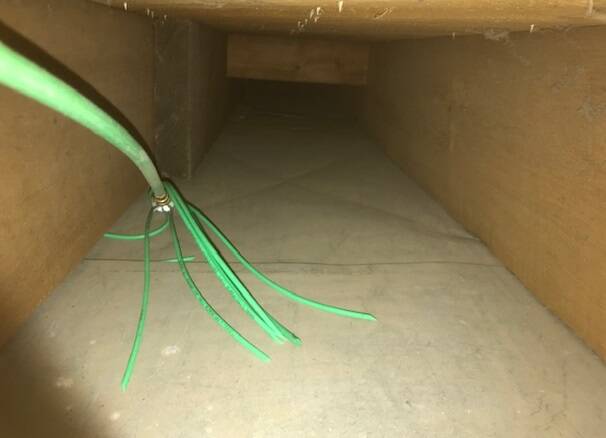
Once the individual supply runs have been worked through, we concentrate on the main supply trunk line.
The main supply trunk is essentially the highway that distributes conditioned air from your HVAC equipment toward the individual supply runs throughout the home.
Material loosened during the cleaning process is moved toward the collection point.
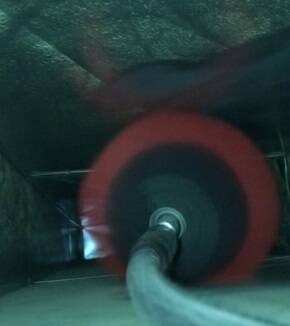
Where access permits, we use our agitation equipment inside the main trunk to loosen material that has accumulated along the interior surfaces.
With the system under negative pressure, that loosened debris is directed toward our vacuum equipment for collection.
Why Don't We Just Let the Vacuum Do All the Work?
This is worth explaining because it's one of the biggest misunderstandings about duct cleaning.
Even a powerful professional vacuum isn't going to magically pull every piece of debris from every corner of a residential duct system simply because it's connected near the furnace.
Debris needs to be agitated.
Dust can settle along the bottom of ductwork. Pet hair can collect in return ducts. Construction material can remain inside a system for years.
That's why we combine negative pressure with physical agitation and compressed air.
We're loosening the material while creating a controlled path for it to travel toward the collection equipment.
Step 6 — Cleaning the Return Ductwork
After working through the supply side, we move to the return-air ductwork.
The return side deserves particular attention.
Your return ducts pull air from the home back toward the furnace, where it passes through the filter before reaching the blower and being redistributed through the supply system.
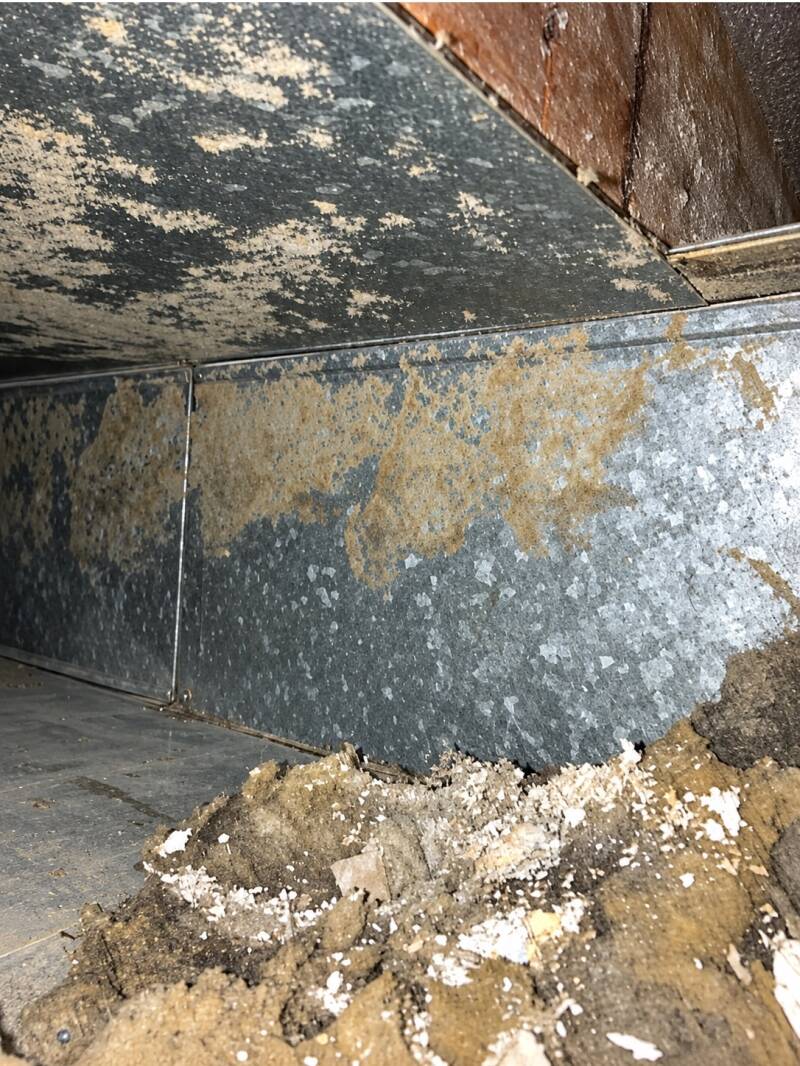
Because of what the return system does, this is often where we encounter some of the heavier accumulations of:
Dust, pet hair and household debris.
If you've ever removed a return grille and found a layer of dust and hair behind it, you're seeing only the portion of the return system that's immediately visible.
The ductwork continues beyond that opening and eventually connects to the main return trunk.
We work through the accessible return runs using the same basic principle we used on the supply side:
Negative pressure + agitation + collection.
Step 7 — Cleaning the Main Return Trunk
The individual return ducts eventually feed into the main return trunk, which carries air back toward the furnace and filter.
This area is particularly important because it's directly upstream of your furnace equipment.
We work through the accessible main return ductwork and loosen accumulated material so it can be pulled toward our collection equipment.
This is also one reason we don't consider simply vacuuming the first several feet of a return grille to be equivalent to professional duct cleaning.
You may have cleaned what your vacuum hose can reach.
That doesn't mean you've cleaned the complete return system.
What About the Furnace Blower?
This is where our HVAC background becomes useful.
The duct system doesn't end at the furnace.
Air returning from your home eventually reaches the furnace filter and blower assembly.
If we find a heavily contaminated blower wheel or another HVAC concern while working around the system, we'll let you know.
A dirty blower isn't automatically included as part of a standard duct cleaning because properly cleaning a heavily contaminated blower assembly can require additional disassembly and labour.
But we're not going to ignore it either.
We're HVAC technicians.
If we see something that concerns us, we'll explain what we found and what options are available.
Step 8 — Final Inspection and Sealing the Ductwork
Once the supply and return sides have been cleaned, we complete our final inspection and begin removing the duct-cleaning equipment.
Any access openings created in the sheet-metal ductwork for the cleaning process are properly closed and sealed.
We then clean our work area and make sure the HVAC system has been returned to its proper operating condition.
Professional duct cleaning shouldn't leave your mechanical room looking like a construction zone.
Step 9 — Before-and-After Photos & Service Report
One of the biggest problems homeowners have with duct cleaning is simple:
Most of your ductwork is hidden.
You can't stand beside us and see what's happening 20 feet inside a trunk line.
That's why, whenever possible, we take before-and-after photos showing the condition of accessible portions of the duct system.
Once we're finished, we'll explain what we found, what was cleaned and anything unusual we noticed while working on your HVAC system.
We also provide a service report documenting the work performed.
You shouldn't have to simply take someone's word that your ducts were cleaned.
How Long Does Professional Duct Cleaning Take?
For a typical residential home, our duct-cleaning process generally takes approximately 2 to 3 hours.
Larger homes, multiple HVAC systems, difficult access or particularly dirty ductwork can require additional time.
And that's something worth considering when comparing duct-cleaning services.
Proper duct cleaning requires time to set up the equipment, establish negative pressure, work through the individual supply and return runs, clean the main trunk lines, remove the equipment, seal access points and clean up afterward.
It's not a five-minute process.
Professional Duct Cleaning Is More Than Vacuuming Your Vents
If there's one thing we want homeowners to understand about the duct-cleaning process, it's this:
Professional air duct cleaning is not simply vacuuming your registers.
A proper cleaning involves accessing the HVAC duct system, creating negative pressure, loosening accumulated material with agitation equipment and directing that material toward professional collection equipment.
The supply ducts matter.
The return ducts matter.
The main trunk lines matter.
And the HVAC equipment connected to that ductwork matters.
That's why at SDG Duct Cleaning, we approach duct cleaning from the perspective of HVAC technicians.
We're HVAC technicians—not just duct cleaners.
Professional Air Duct Cleaning in Cornwall, SDG & Eastern Ontario
SDG Duct Cleaning provides professional residential air duct cleaning throughout Cornwall, Stormont, Dundas & Glengarry and surrounding Eastern Ontario communities.
If you'd like to know more about our process, whether your ducts need cleaning or what professional duct cleaning will cost for your home, contact SDG Duct Cleaning for a quote.
Professional Duct Cleaning by HVAC Technicians
SDG Duct Cleaning provides professional air duct cleaning throughout Cornwall, SDG and surrounding Eastern Ontario communities. We're locally owned and operated, but what really sets us apart is that we're HVAC technicians—not just duct cleaners. We understand how your ductwork, furnace, blower and HVAC system work together, allowing us to provide thorough duct cleaning backed by real HVAC experience.
Email: Info@Sdgductcleaning.ca
Phone number: 343-885-8778